India Drone Rules for Consumers
A source-led guide for hobby and consumer drone owners in India: all-up weight, type certification, pilot credentials, registration,...
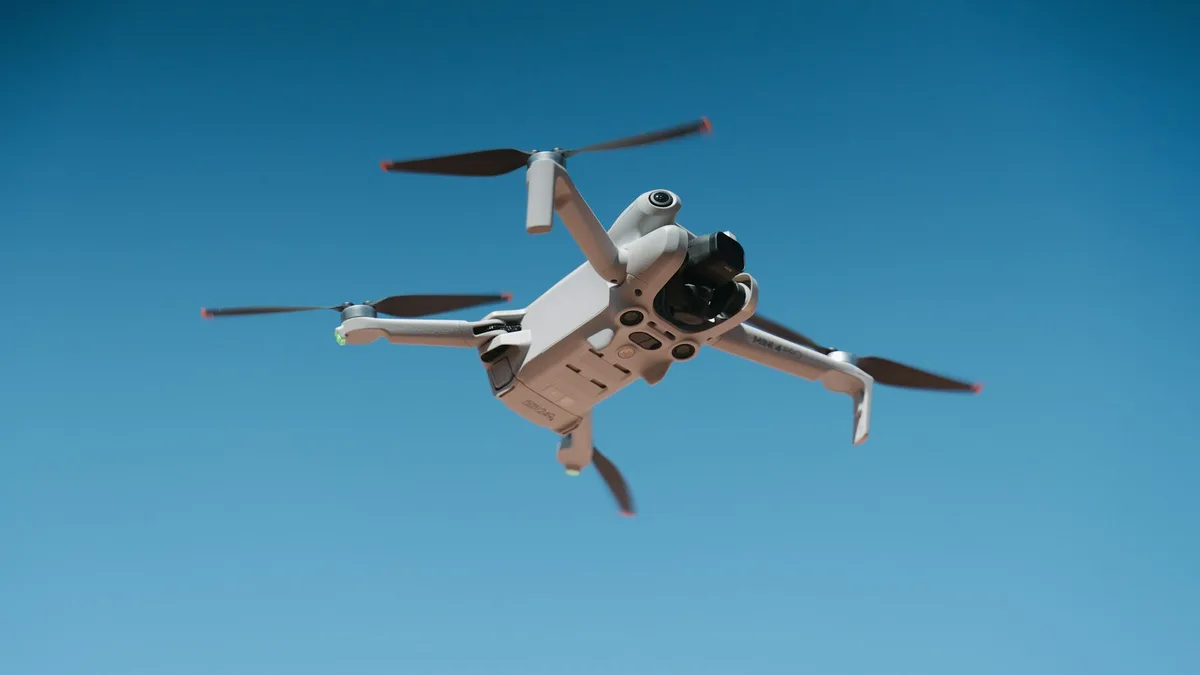
A small camera drone is still an aircraft in Indian airspace. The phrase “under 250 grams” can describe a useful weight class, but it is not a one-line permission to buy, carry and fly a DJI Mini anywhere. A consumer needs to separate at least six questions: the aircraft's actual maximum all-up weight, type-certification status, registration and unique identification number, the pilot's credential requirement, the airspace and site for the flight, and the way the unit entered India. Each question has a different source and may produce a different answer.
This guide reads the Drone Rules, 2021 in the Gazette, the later 2022 amendment, the Ministry's 2023 amendment listing, and the current DigitalSky portal. It is an editorial explanation, not a permission certificate or a substitute for the current text and agency instructions. Check those sources again before a real operation; a map status, portal workflow or rule can change after an article is written.
The nano threshold measures the flying configuration
The Rules define nano as a drone with maximum all-up weight, including payload, of no more than 250 g. This is not simply the empty airframe weight printed in a product advertisement. Fit the battery that will actually be used, propellers, card, guards, lights or any other carried accessory, and check the manufacturer's configuration statement. DJI says several Mini models are below 249 g with a standard battery, while an optional Battery Plus can move the same aircraft above 249 g. The legal class follows the aircraft as configured, not its retail name. If a seller offers a “nano drone” with a heavier replacement battery, ask for the exact pack model and measured configuration before making a policy claim.
The inclusive 250 g boundary is easy to misstate. “250 g or less” is the nano definition; “below 250 g” is a common marketing shorthand, and “249 g” may be a laboratory standard configuration. Do not assume a scale reading alone settles a dispute about maximum all-up weight or payload capacity. Keep the manufacturer specification and a record of the actual equipment you intend to fly. If the configuration falls into a different class, review the requirements for that class instead of borrowing the nano exemptions.
Type certificate, registration and pilot credential are separate
Rule 13 says a type certificate is not required to operate a nano unmanned aircraft system or a model remotely piloted aircraft system. That is a narrow exemption. It does not say every nano is exempt from registration, from airspace restrictions or from care around people. Rule 14 sets the general requirement to register an unmanned aircraft system and obtain a unique identification number unless an exemption under the Rules applies. The Ministry's parliamentary response on consumer and other drone operations describes registration and UIN as generally required outside stated research, development and testing cases. Because informal websites disagree about nano registration, do not rely on a blanket “no UIN for 249 g” claim. Check current DGCA or eGCA guidance for the exact aircraft and ownership history before operation, and retain the official outcome.
The pilot question is different again. The Rules' licence exemption covers operation of a nano drone, and operation of a micro drone for non-commercial purposes. The micro exception has a purpose condition; it should not be copied into advice for paid micro-drone work. The 2022 amendment replaced the earlier remote pilot licence wording with a remote pilot certificate framework, so read the amended requirements and current DGCA workflow rather than relying on an old training-school advertisement. An exemption from a pilot credential is not an exemption from safe flight, airspace checks or other laws. A first-time owner should still learn the aircraft, rehearse emergencies and keep someone able to watch the surroundings.
Insurance has its own rule. A Ministry answer to Parliament on drone insurance quotes the Rules' proviso that a nano UAS may operate without third-party insurance. “May operate without” does not mean damage has no consequences or that a commercial client, venue or contract will never ask for cover. Larger classes and specific assignments need their own insurance review. If the aircraft's Plus battery or accessory changes its class, revisit the insurance position as well as the weight-based credential questions.
Check the airspace map for every flight
Rule 21 requires the operator to verify the current airspace map before a flight. The Airports Authority of India's DigitalSky portal explains the green, yellow and red zones. In a green zone, prior airspace permission is generally not required under the Rules, subject to the map check and other applicable conditions. Yellow-zone operation requires the concerned air traffic control authority's permission. Red-zone operation requires Central Government permission. These are three different decisions; a DJI app's geofence colour is not the Indian airspace classification.
The height geometry also matters. DigitalSky describes a general green zone up to 120 m where that airspace has not been designated red or yellow, and a lower 60 m green-zone ceiling in the specified 8–12 km band from an operational airport perimeter. Space above those limits is yellow under the portal's definitions. Do not turn “green zone” into “unlimited height.” The map may change, and authorised bodies can publish temporary restrictions. Record the location, date, intended altitude and map view for your operation. If the proposed route touches a boundary or the map is unclear, stop and seek authoritative clarification rather than guessing from a screenshot shared in a social group.
Land access is another layer. A lawful airspace reading does not grant permission to launch from someone's terrace, film inside a private compound, fly through an event crowd or ignore a venue's rules. Ask the owner or venue for access, keep a route clear of non-participants, and avoid capturing sensitive private activity. Police or local authorities may issue temporary instructions around events or protected areas. A practical consumer flight plan therefore has a specific launch point, a short route, a safe landing area, a weather limit and a person responsible for stopping the flight if the environment changes.
Buying a DJI Mini is not the same as importing one
The DGFT notification of 9 February 2022 sets an import-policy prohibition for complete drones in fully assembled and specified knocked-down forms, with defined exceptions; components receive separate treatment. It addresses entry into India, not the permission for a flight by an aircraft already here. A marketplace listing, customs story or GST invoice is evidence to examine, not a complete legal answer. Before bringing a drone from abroad or buying a high-value unit of unclear provenance, check the current DGFT and customs position for the specific transaction. Do not assume a personal-use label automatically creates an exception.
For a second-hand purchase, request an invoice or transfer record, the aircraft and controller serial numbers, battery details and any existing registration status. Rule 17 of the 2021 Rules deals with transfer of a registered aircraft, so a buyer should check what the current portal requires to update ownership. Verify that the device works on your controller and app account. Keep import, registration, service warranty and physical condition as four separate checks. A seller who can demonstrate only a smooth hover has answered just one of them.
Consumer scenarios that expose the differences
Consider a standard-battery Mini flown for a personal landscape clip in a currently green area. Its weight may place it in nano, the pilot-credential exemption may apply, and the zone may not require prior airspace approval. The operator still needs to verify the map, resolve registration or UIN status with current official guidance, obtain site access, choose a safe route and keep within the aircraft's operating conditions. A neighbour's roof is not a free launchpad because the aircraft is small.
Now consider the same model with a Battery Plus or an accessory that changes its all-up weight. The hardware name has not changed, but the legal class may have. Review the credential, registration, type-certification and insurance position for the resulting configuration, and document the weight. The route's airspace zone remains a separate check. Avoid deciding on the flight by remembering what applied to the lighter setup last month.
Finally consider a micro-class drone used for a paid property film. The non-commercial purpose condition for the micro pilot-credential exemption no longer describes the job. The client will also expect a defined deliverable, location permission and an appropriate risk plan. Buying a larger aircraft for better footage may be commercially sensible, but it expands compliance questions. A small studio should address those in its call sheet before quoting the shoot as “just a quick drone flight.”
A practical policy checklist for the owner
Before purchase, identify the exact aircraft, controller, battery and accessories. Read the manufacturer's weight and compatibility statements. Ask for provenance, service route and any existing registration record. Before each flight, check the current Drone Rules and official DigitalSky map, confirm whether any permissions or pilot credentials apply to this configuration and purpose, and obtain access to the ground location. Check weather, people, obstacles and a safe recovery plan. Keep evidence of the decision: screenshot or reference for the map, date, location, equipment configuration and any approval received.
The most common consumer mistake is collapsing all of this into “249 g means no rules.” India gives meaningful relief to some small-drone operations, but each relief addresses a specific requirement. A nano type-certificate exemption does not settle UIN status, a pilot-credential exemption does not open a red zone, and a green-zone map does not prove lawful import. Treat the aircraft, person, place and transaction as separate parts of one documented decision. That is the practical way to enjoy a DJI Mini without promising yourself a permission the sources do not grant.
Plan your project
Share your site, dates and intended output so we can confirm a suitable scope.
Explore managed drone services · Compare project scope · Get in touch
Related reading
- How to Get a DGCA Remote Pilot Certificate (RPC) in India
- The 250g Loophole: How Nano Drones Disrupted India
- Buying or Importing a DJI Drone in India: A Consumer Provenance Guide
Contact SkyViews Aerial Drone Studio at +91 90190 56479 or skyviewsdronestudio@gmail.com. Service area: Bangalore, Karnataka and India and wider Bangalore, Karnataka and India.