Buying or Importing a DJI Drone in India: A Consumer Provenance Guide
Understand India’s complete-drone import restriction, the older baggage advice, and the records to request before buying a new or used DJI...
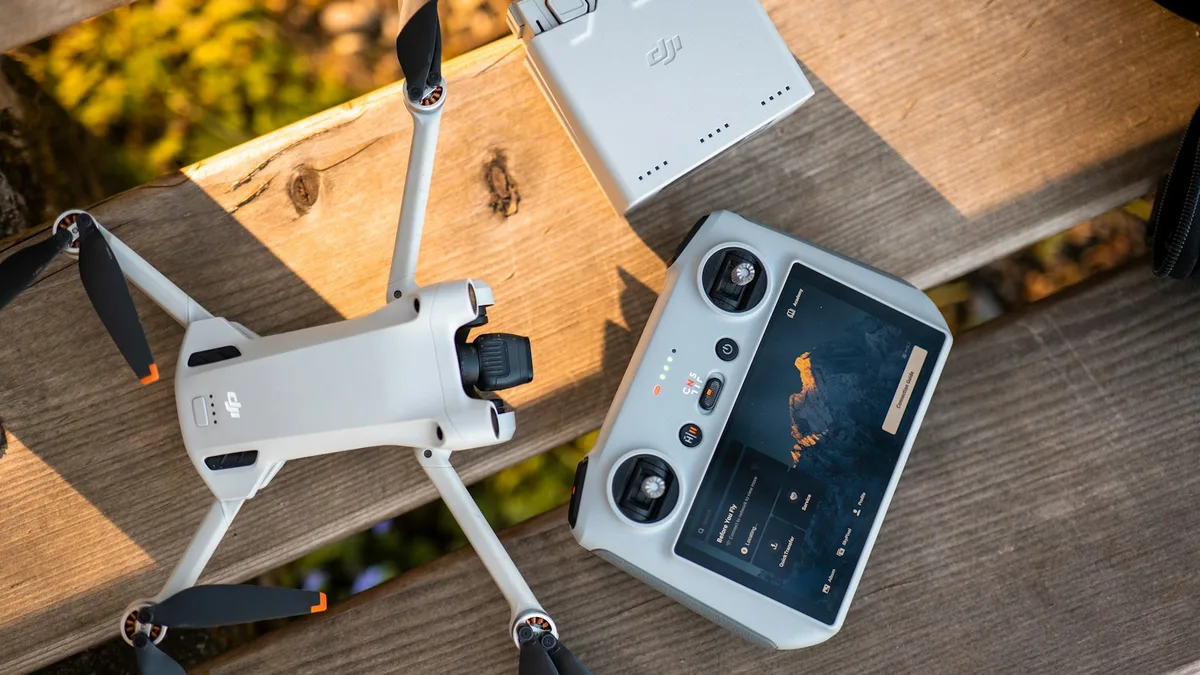
A DJI Mini advertised for sale in India can look like a simple camera purchase. The policy questions are more complicated. The buyer needs to know whether the aircraft was brought into India through an authorised route, whether the seller can demonstrate ownership and transfer, whether the aircraft can be registered or transferred under the current official workflow, and whether a particular flight is permitted. These are separate questions. A working drone, an invoice and a green-looking map screen answer different parts of the problem.
This guide uses the DGFT notification of 9 February 2022, the Drone Rules, 2021, the DigitalSky portal, and a CBIC traveller guide. The DGFT notification and traveller guide describe different procedures and dates; their apparent tension must be resolved with the competent authorities for an actual transaction. This is consumer research, not an import authorisation or a statement that a particular listed unit is lawful or unlawful.
Read the revised DGFT condition, not the old nano paragraph
The DGFT notification displays an old policy condition beside its replacement. That layout has caused confusion online. The old column described a restricted import process and mentioned an exception for nano aircraft operating below 15 metres. The revised condition, issued in February 2022, says import of drones in completely built-up (CBU), semi-knocked-down (SKD) and completely-knocked-down (CKD) form is prohibited, with specified exceptions. It permits import for certain government, recognised educational and research bodies, and drone manufacturers for research and development, or for defence and security purposes, subject to DGFT authorisation and consultation. It also says import of drone components is “Free” under that policy condition.
The old nano paragraph is not an additional exception that survives beside the revised text. A 249 g retail drone does not become eligible for ordinary personal import because it is small. Nor does putting a complete product in a different box or describing it as a kit automatically turn it into unrestricted components. The revised condition expressly includes SKD and CKD forms. A buyer planning a shipment should obtain the current classification and authorisation position for the exact goods before paying a supplier. “Free” for components is an import-policy label, not a promise that every component has no tariff, radio requirement or other condition, and not permission to evade the complete-drone restriction.
The notification governs entry of goods into India. It does not by itself prove that every drone already possessed in the country is illegal, or settle whether a given aircraft may be flown. Historic imports, locally assembled units and authorised imports can have different records. Conversely, physical possession does not establish lawful import. Ask for evidence rather than reaching a blanket conclusion from a product logo or the apparent age of its serial number.
What about bringing a drone in passenger baggage?
The publicly available CBIC traveller guide says that drones carried as baggage are to be declared through the Red Channel or an advance declaration and discusses a WPC import licence naming the model and specifications. It also contains the sentence that there is no prohibition on import of drones as baggage. That statement appears inconsistent with the later, explicit DGFT prohibition for CBU, SKD and CKD drones, and a traveller should not treat the guide alone as a current exemption from the later import-policy condition. Baggage declaration, radio authorisation, customs assessment and DGFT import permission address different requirements.
If you are returning to India with a DJI drone, contact the relevant customs office and DGFT before travel, describe the exact model, ownership history and intended entry, and request current written guidance. A new overseas purchase, an aircraft previously taken out of India and brought back, a temporary visitor's unit and an authorised institutional shipment may need different evidence. Do not assume that using the Red Channel guarantees admission. Likewise, do not conceal the unit or treat separating the propellers, batteries and controller as a legal strategy. Keep original purchase and export or re-entry documents where applicable, and follow the official determination for your case.
An airline's permission to carry the equipment is yet another question. Battery carriage is governed by airline and aviation dangerous-goods instructions and cannot settle customs or drone-flight policy. Before travel, obtain the airline's current lithium-battery limits for the exact pack watt-hours and quantity, protect terminals and transport batteries as directed. A boarding pass with the drone in a bag is not an Indian import approval.
Three records to request from a domestic seller
First, ask for the commercial chain: seller identity, a dated itemised invoice naming the exact aircraft and controller model, and, where relevant, records that explain how the unit entered the Indian market. An Indian GST invoice can establish a sale, but it is not on its own a DGFT import authorisation. A seller should be able to explain whether the unit was locally made or assembled, imported under an applicable authorisation, acquired earlier, or purchased from another owner. If that story changes between messages, pause the transaction. Avoid broad claims that every imported DJI listing must have the same documentary path; ask for records appropriate to its actual history.
Second, match device identity. Record the aircraft serial number, controller serial number and battery model or serials where available. Compare them with the invoice, original box, device information in the control app and any registration record. A box label that matches a different airframe does not establish the aircraft's history. Ask the seller to power on and demonstrate the exact equipment, to show any account or device binding status, and to explain whether a previous owner's account action is needed. Do not publish serial numbers online while seeking advice; share them only with a party that has a legitimate reason to verify them.
Third, check aviation records. The Drone Rules set out registration and unique identification number requirements, with specified exemptions and a transfer process for a registered aircraft. Ask whether the unit has a UIN or another current official registration outcome, and whether the current DGCA or eGCA workflow permits the ownership change. Rule 17 concerns transfer of a registered drone; a private bill of sale alone does not update an official record. A nano aircraft's type-certificate or pilot-credential exemption should not be used as a shortcut to claim that registration, import or airspace rules vanish. Where a portal workflow is unavailable or ambiguous, seek a current response from the responsible agency before an expensive purchase.
Ask about service without assuming a global warranty
A genuine DJI product and a valid Indian service entitlement are not identical claims. Manufacturer warranty terms can depend on country of purchase, authorised channel, serial region, transfer and the specific product. Ask the seller to identify the actual repair contact, the written warranty policy, who pays outbound and return freight, and what happens when a battery or gimbal fails. Seek confirmation from the service provider rather than accepting an unspecific “international warranty” line in a marketplace description. A drone can fly perfectly on the test day yet be difficult to repair locally six months later.
Used units need a physical inspection alongside the paperwork. Check the shell and arms for repairs, motor noise, propeller mounting, gimbal self-test, controller sticks, camera focus, card recording and battery swelling. Review flight and battery records where the app exposes them, but do not treat a low cycle count as a certificate of health. A short, lawful test flight can expose control or camera faults; it cannot verify import provenance or clear a registration problem. Agree in writing on what is included in the sale, especially the controller, chargers, batteries and software-account steps.
Import, ownership and flight: three separate decisions
Imagine a seller offering a new Mini at an attractive price. The seller gives a GST invoice and a video of it hovering. Those establish a transaction and a limited functional demonstration. They do not explain the unit's entry into India, whether any transfer is needed, or whether its service channel is usable. The buyer should request the provenance and device records before using the price as the deciding factor. A vague claim that “all Minis are exempt because they weigh 249 g” is a warning sign because weight does not create a complete-drone import exception.
Now imagine a used drone with an older purchase record and a visible UIN. The import story may be more credible, but the buyer still needs to confirm that the airframe, control module and record refer to the same unit and that a transfer can be completed. If a registered unit has had its control module or ground station replaced, check the Rules' update requirements and current portal record. The objective is traceable ownership, not a pile of unrelated screenshots.
Finally, consider a legally acquired drone at a scenic location. Its provenance does not open restricted airspace. The DigitalSky map must be checked for the planned location and time. Yellow and red zones have permission requirements, while a green zone still has height limits and does not supply ground access or consent to film people. The configured aircraft weight, pilot credential, registration, site permissions, weather and safe recovery plan remain independent checks. A purchaser should budget time for these steps before promising a shoot to a client or planning a holiday flight.
A transaction checklist that fits on one page
Write down the exact product name, serials, battery configuration and intended use. Ask the seller for a dated invoice and a coherent explanation of provenance. Identify the evidence that supports that explanation, and independently verify any claimed authorisation or official status through the relevant agency or portal. Check the aircraft and controller in person, test recording to a card, and obtain a written service route. For a used unit, document seller identity, account release and registration transfer. For a proposed overseas purchase, resolve current DGFT, customs and WPC questions before shipment or travel rather than after the goods reach an airport.
Then make a separate flight file: actual takeoff configuration and weight, current DGCA or eGCA registration outcome, pilot credential if required, DigitalSky zone and any approval, launch-site permission, weather and a recovery plan. Keep the purchase and flight files together for future resale or service. This approach is more work than relying on a retail listing, but it gives a buyer evidence for the questions a listing cannot answer. India's consumer drone policy becomes manageable when import, ownership, technical condition and operation are checked in their own right.
Plan your project
Share your site, dates and intended output so we can confirm a suitable scope.
Explore managed drone services · Compare project scope · Get in touch
Related reading
- India Drone Rules for Consumers: What a 250 g Mini Does and Does Not Exempt
- How Drones Enter India: Baggage Loophole & Markets
- Buying a Used DJI Mini 2 in India: A Field Inspection Checklist
Contact SkyViews Aerial Drone Studio at +91 90190 56479 or skyviewsdronestudio@gmail.com. Service area: Bangalore, Karnataka and India and wider Bangalore, Karnataka and India.