DJI Mavic Mini in India in 2026: A Practical Buyer and Flight Guide
A sourced guide to the original Mavic Mini: what its 249 g design, 2.7K camera and ageing batteries mean for an India-based buyer or creator...
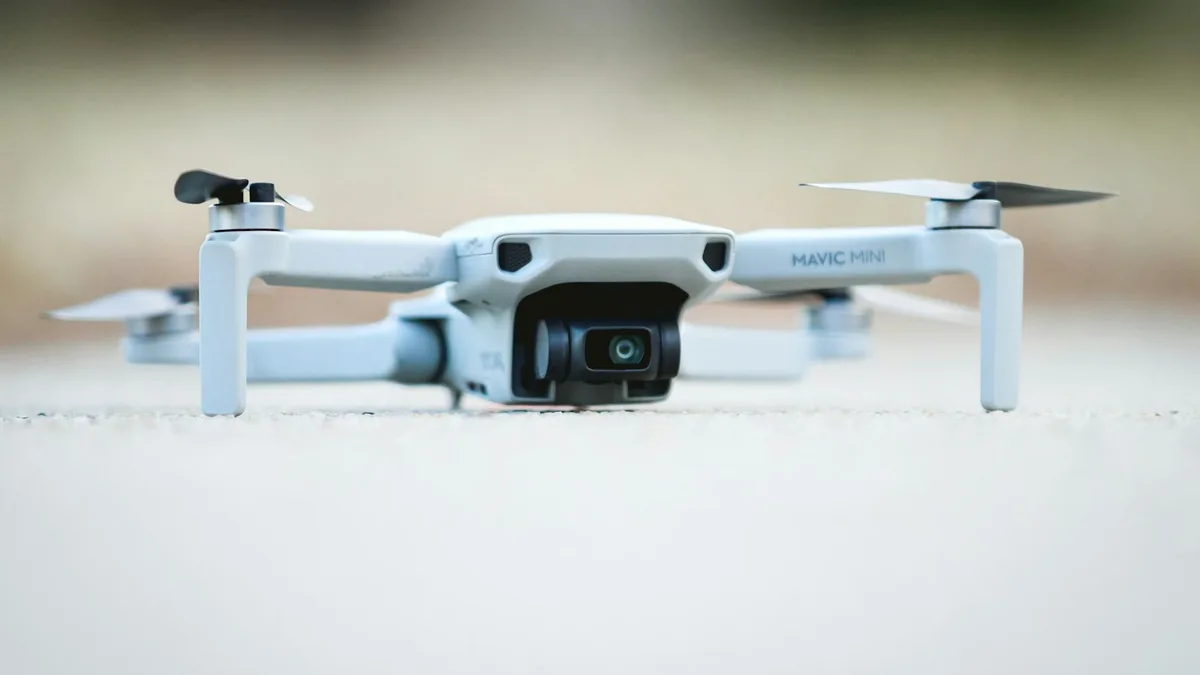
The original DJI Mavic Mini is still a useful way to learn aerial framing, but it is easy to overbuy a used kit because its small size sounds more capable than its camera and radio really are. DJI introduced this model in 2019. Its published specification lists a 249 g takeoff weight, a three-axis gimbal, a 12 MP 1/2.3-inch camera, video up to 2.7K at 30 frames per second, and a maximum flight time of 30 minutes under controlled conditions. Those figures describe the aircraft as supplied and tested, not the performance of an ageing battery in a hot, windy Indian location. See the original DJI Mavic Mini specification before trusting a seller's feature list.
This guide separates three decisions that are often mixed together: whether the aircraft is technically adequate, whether the particular used unit is sound, and whether a proposed flight is lawful and safe. A good answer to one question does not settle the others. A functional camera does not prove a legal import history; a 249 g label does not clear a restricted airspace; and a valid operational plan cannot restore a swollen battery.
What the original Mavic Mini actually gives you
The camera is stabilised mechanically on three axes. That matters more than a headline pixel count for simple reveal shots, slow tracking, landscape overviews and property context. Smooth gimbal movement and a deliberate flight path can still produce a useful web video. DJI's 2.7K file gives an editor some room to deliver at 1080p, but far less room to crop or stabilise aggressively than a newer 4K capture. The maximum video bitrate is 40 Mbps and the original model records H.264 MP4; photographs are JPEG rather than DNG raw files, according to DJI's technical specification linked above.
That camera is a practical limitation in bright Indian midday contrast. A white roof, shadowed frontage and pale sky can exceed what a small sensor and compressed file preserve comfortably. Move the shoot toward softer light, expose to protect important highlights and avoid promising extensive colour recovery. If the brief needs heavy grading, multiple output ratios or detailed still photographs, evaluate a newer camera before accepting the assignment. The original Mavic Mini also lacks camera zoom. Its downward vision system helps with positioning under suitable light and surface conditions, but it is not an all-direction obstacle avoidance system. Trees, cables and facade edges remain a pilot responsibility.
DJI quoted up to 30 minutes in a windless test. A real mission consumes time while taking off, checking the link, composing, changing viewpoints and returning with a reserve. A used battery can reduce that working window further. Plan a short shot list around several safe flights rather than assuming a full half-hour of useful recording from one pack. Transmission is DJI's enhanced Wi-Fi generation, not the later OcuSync system. DJI's maximum range figures are measured in ideal conditions and should never be read as a target distance for a flight over a dense city.
What 249 g does and does not mean in India
India's Drone Rules, 2021 define the nano class by maximum all-up weight, including payload, of 250 g or less. DJI's stated 249 g is a product figure. A guard, tracker, decorative attachment or different battery can alter the actual ready-to-fly weight. Weigh the exact configuration rather than repeating the figure on the box. The Rules exempt nano aircraft from type certification and the remote pilot licence requirement, but they do not turn every location into open airspace.
Rule 21 requires a remote pilot to verify applicable restrictions on the DigitalSky platform before a flight. Green, yellow and red zone treatment is described in the Rules; a green-zone operation does not require the same prior permission as yellow or red zones, subject to the required checks. The map can be updated, and temporary restrictions can apply. Check the live DigitalSky map and current Ministry of Civil Aviation rules for the site and date. A DJI app geofence is a separate manufacturer control: a DJI unlock is not an Indian aviation permission, and a DJI green indication is not evidence that DigitalSky has cleared the flight.
Do not treat the nano pilot-licence exemption as a general statement that no records, registration steps, landowner consent or other requirements can matter. The legal position depends on the aircraft's configuration, provenance, use and the rules in force when it flies. This article is a planning explanation, not legal advice or a flight authorisation. For a commercial client, write down the pilot, aircraft, site, time window, airspace check and emergency landing plan even if a particular statutory exemption applies.
Import history is a separate buying question
The DGFT import-policy notification of 9 February 2022 describes a prohibition on imports of complete, semi-knocked-down and completely-knocked-down drones, with specified exceptions for research, defence and security; components have a separate treatment. That policy is distinct from the rules for flying an aircraft already in India. Before importing, buying or relying on an invoice, check current DGFT and customs material or obtain qualified advice for the particular transaction. An online listing, a GST invoice or a seller's statement of “DJI warranty” is not, by itself, proof of lawful import or manufacturer-backed service in India.
For a used unit, ask for the purchase record, aircraft and controller serial numbers, a clear explanation of ownership, and evidence that the seller can demonstrate the complete system. If these records are missing, treat the uncertainty as part of the purchase decision. Do not pay a premium based on a vague claim that a sub-250 g drone is automatically exempt from every rule. Avoid quoting a “current India price” without a dated, verifiable offer and an understood warranty route; informal listings move and may not be comparable.
A practical inspection before money changes hands
First examine the airframe under good light. Look at arm hinges, motor mounts, landing feet, the camera housing and the gimbal's freedom of movement. A neat shell can still hide a hard landing. Inspect each propeller for nicks, deformation and mismatched replacement parts. Ask the owner to show the app's model identification, battery information and firmware state. A serial number printed on a box should match the item being sold; photograph records only with the seller's consent and keep personal information private.
Next test every included battery. Reject a pack that is swollen, damaged, leaking or unusually hot. Charging should complete normally using suitable equipment, and the aircraft should report the pack without errors. Battery cycle count is useful context, but age, heat exposure and storage history matter too. Ask whether the packs were left fully charged in a vehicle or stored for months without checks. A low advertised price can become poor value if all batteries need replacement and genuine compatible stock is difficult to source.
Finally, perform a short, lawful demonstration flight in an appropriate open location after the airspace check and site permission. Observe GNSS acquisition, a stable hover, live-view quality, controller response, gimbal movement, recorded file playback, return-to-home settings and a normal landing. Do not ask for a risky distance test or fly above people to prove radio range. If a demonstration flight is not possible, price the aircraft as unverified equipment rather than accepting screenshots of an earlier flight.
Filming well with the legacy camera
The Mavic Mini rewards a simple visual plan. Choose two or three views that explain a place: a wide establishing view, an oblique approach and a restrained reveal. Avoid fast yaw and abrupt altitude changes, which make a small-sensor video feel less polished. Lock exposure when changing composition would otherwise pump brightness, and check the histogram or screen for clipped bright surfaces. Record a few seconds before and after each intended edit point. Keep movement slow enough that an editor can cut at natural moments.
For property content, do not use a wide view to imply that a landmark, road or station is closer than it is. Where distance matters, provide a map or measured statement from an authoritative source instead. Keep windows, balconies and people out of close frames unless the shoot brief and privacy arrangements support them. A compact drone can be less conspicuous, but it is still an aircraft with a camera; considerate planning matters as much as technical portability.
Transfer a sample file before the assignment, open it on the device that will edit the project, and check colour, sharpness and compression at the planned final size. A client asking for 4K master files, raw stills, true vertical shooting or advanced tracking is asking for capabilities the original Mavic Mini does not provide. Set that expectation before capture. If the brief is mostly a 1080p website film or occasional site-context stills, careful technique may matter more than a specification upgrade.
When to choose a newer Mini instead
DJI's Mini 2 specification adds 4K/30 video, DNG stills and a later OcuSync 2.0 transmission system. The Mini 3 has a larger 1/1.3-inch sensor and true vertical shooting. These changes are meaningful if the brief includes heavier photo editing, social-first portrait video or a less forgiving radio environment. They do not remove the need for a lawful airspace and site plan. DJI also warns that the Mini 3 Battery Plus changes the aircraft's weight category; compare exact battery configurations, not just model names.
Choose the Mavic Mini when the individual aircraft is demonstrably healthy, the work fits its actual output and the total cost including usable batteries makes sense. Choose a newer aircraft when the final deliverable needs the feature, not because a spec sheet has a larger number. For a paid production, a competent crew, a backup plan and a clear handoff often matter more than owning the newest small drone.
Before the first assignment
Write a one-page mission brief: client purpose, capture location, lawful access, current DigitalSky result, nearby obstacles, expected weather, people who may enter the area, takeoff and landing points, battery plan, return-to-home altitude and alternative date. Then record the intended output dimensions and review route with the client. This avoids a common failure: taking attractive footage that cannot be used because it misses the decision the client needed to make. If the site is complex, near controlled airspace or commercially sensitive, involve an experienced operator rather than relying on the aircraft's low weight.
The original Mavic Mini remains a capable learning platform and a modest production tool in the right circumstances. Its limits are knowable. Confirm them from the DJI specification and official India sources linked above, and insist on a real inspection of the exact kit. Those checks are more useful than a blanket claim that a 249 g aircraft is either automatically safe or automatically obsolete.
Source notes
Product figures above come from DJI's published Mavic Mini, Mini 2 and Mini 3 specifications. India-specific classifications and airspace duties are based on the official Drone Rules, 2021, as amended, and the current DigitalSky workflow. The DGFT notification addresses import policy, not a blanket rule about every existing aircraft or flight. The operational recommendations are SkyViews' editorial interpretation of those sources; reconfirm live requirements before a purchase or flight.
Plan your project
Share your site, dates and intended output so we can confirm a suitable scope.
Explore managed drone services · Compare project scope · Get in touch
Related reading
- DJI Mavic Mini vs Mini 2 in India: Which Used Drone Is Worth Buying?
- Buying a Used DJI Mini 2 in India: A Field Inspection Checklist
- DJI Mini 2 SE vs Mini 4K in India: Choose for the Finished Video
Contact SkyViews Aerial Drone Studio at +91 90190 56479 or skyviewsdronestudio@gmail.com. Service area: Bangalore, Karnataka and India and wider Bangalore, Karnataka and India.