DJI Mini 4 Pro in India: Camera, Sensing and Production Workflow
A practical India-focused guide to the Mini 4 Pro: where its vertical 4K, 10-bit colour and omnidirectional sensing help, and where careful...
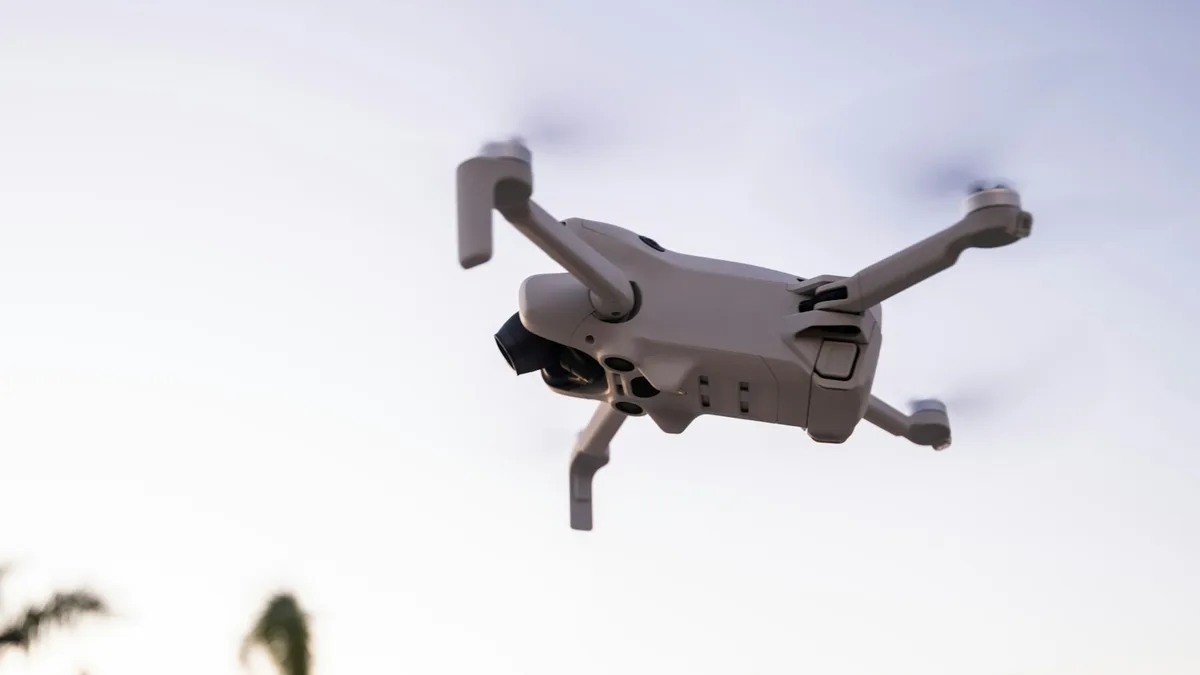
The DJI Mini 4 Pro combines a genuinely useful small camera with extensive vision sensing, but neither feature replaces a production plan. In India, the right question is not simply whether it is the most capable Mini available. It is whether the aircraft can deliver the required files at the proposed site, with the chosen battery, crew and permissions. This guide turns the DJI Mini 4 Pro specifications into decisions a buyer or producer can test before accepting a client brief.
DJI lists a sub-249 g standard configuration, a 1/1.3-inch camera, JPEG and DNG photos, true vertical recording, 4K video up to 60 fps in standard modes, 10-bit HLG and D-Log M options, O4 transmission and an omnidirectional binocular vision system assisted by a downward 3D infrared sensor. It also lists 4K/100 fps as a slow-motion capture mode, with codec and playback restrictions. Those are useful tools, but a product page does not promise every mode in every combination. Check the precise resolution, frame rate, colour format and card requirements against DJI's current documentation before writing them into a deliverables contract.
Design the file handoff before selecting a mode
For a property launch, the client may want a landscape master, a vertical social cut, still photographs and short clips for paid adverts. Ask for final dimensions, duration, captions, review rounds and whether the editor needs a normal colour file or a graded source. Mini 4 Pro's rotating camera can record a native portrait frame. This is especially valuable when a tower, entrance or narrow site must fill a vertical reel without severe cropping. Record a short test in the exact mode and export it through the intended edit software; the promise is the finished file, not a mode name on the controller.
The 10-bit D-Log M and HLG options offer more latitude for a team that can monitor exposure and finish colour consistently. They can also slow delivery if the operator records a flat profile without a grading workflow or mixes it with differently exposed ground footage. For a quick-turnaround event recap, a carefully exposed normal profile may be the more practical choice. If the project needs a matched series of daylight and dusk shots, perform a brief colour test before the shoot. A 10-bit file cannot recover clipped highlights in white rooftops or missing shadow detail in a badly exposed capture.
DJI lists 12 MP and 48 MP still modes and DNG output. The higher pixel setting is useful to inspect, but pixel count alone does not guarantee fine detail across a hazy, vibrating or backlit scene. For high-value property stills, take multiple controlled frames, check focus and exposure, and open the originals on a larger display. Schedule the building face for favourable light. Use a ground camera for signage, interiors and close detail that a small aerial camera cannot resolve responsibly from a safe distance.
Understand what omnidirectional sensing can and cannot do
The Mini 4 Pro's sensing coverage is a meaningful change from the forward, backward and downward arrangement on Mini 3 Pro. DJI specifies forward, backward, lateral, upward and downward vision measurements. The same table also requires surfaces with discernible patterns and adequate light for vision performance; its listed effective sensing speeds differ by direction. Read those operating conditions, not only the word “omnidirectional.” Vision can struggle with thin wires, transparent or reflective surfaces, water, low light and low-texture walls. DJI's beginner guidance explicitly warns about difficult surfaces.
On a Bangalore construction site, scaffolding, cables and nets are exactly the features that can be hard for a small camera-based sensor to interpret. Do not plan a close lateral pass because a sensor icon is green. Walk the site, set a conservative stand-off distance, brief a spotter and define the escape direction. If the building is too close to maintain clearance, change the angle or use ground equipment. The pilot remains responsible for the aircraft when an automated path is active.
ActiveTrack 360°, waypoint flight, cruise control and advanced return-to-home can save time in a rehearsed environment. They can also introduce a new route that was not obvious from the starting position. Before using a tracking mode, examine the full area the subject might enter, not just the first frame. Record the intended altitude and route, maintain a clear manual takeover option and decide what happens if tracking is lost. A construction crane can move, an event crowd can disperse into the route, and a vehicle can enter a street. Never use automation as permission to fly where a manual pass would be unsafe.
Plan batteries and radio with real margins
DJI states a 34-minute maximum for the standard Intelligent Flight Battery and 45 minutes with an optional Battery Plus under controlled conditions. It also states that the Plus pack takes Mini 4 Pro above 249 g. Actual flights include takeoff, positioning, repeated takes, wind and a safe return reserve. Measure your usable minutes on the intended site and stop before the aircraft has to rely on an emergency landing. A second healthy standard pack may be more useful than an overlong single take. DJI lists a 5–40°C charging range for the batteries; shade and adequate cooling are practical requirements in Indian heat.
O4 transmission can give a clear monitor image in suitable conditions, but the advertised maximum distance is not a safe shooting distance or a legal operating allowance. Concrete, steel, trees and other radios can reduce link quality. The crew should know the home point, return-to-home altitude, signal-loss behaviour and a nearby landing option. Keep the aircraft where its orientation and surroundings can be observed under the applicable rules. A good shot plan uses the reliable portion of the site, not the edge of a marketing range figure.
India-specific checks belong in the call sheet
The Drone Rules, 2021 use maximum all-up weight including payload to define nano. DJI's standard-weight statement is a product configuration, so verify the actual aircraft with the battery, card, guards, light or any other accessory to be flown. A different battery can change the category. Nano classification alone does not waive the preflight airspace-map check. Open the official DigitalSky map for the exact location and current operating window. Confirm any relevant site access, owner consent, event restrictions and aviation instructions before taking off.
DJI's FlySafe geofence and India's DigitalSky airspace status answer different questions. If either shows a restriction or an unexpected warning, stop and resolve the issue through the proper channel rather than treating the other app's display as a workaround. Overseas product language about “no registration” or “no training in most countries” is not a reliable description of a particular Indian operation. If the assignment sits near an airport, military facility or controlled site, obtain authoritative advice and permissions well before the crew arrives.
Buying and importing are separate again. The DGFT notification on drone imports contains restrictions and specified exceptions for complete drones. A local listing does not establish a lawful import chain or manufacturer-backed Indian warranty. Request invoices and serial-number records, verify the actual service route, and check current policy before a high-value purchase. Do not infer current availability or price from an overseas DJI store page.
A practical preproduction test
Build a ten-minute proof-of-output session at a lawful open location. Record one 4K landscape move, one native vertical move, a normal-colour clip and a D-Log M or HLG clip if grading is planned. Take a DNG still. Export the files into the actual editing application and deliver a draft in the client's target aspect ratios. Check whether motion, exposure, colour and file sizes are manageable. Test the app's warning display and the camera's behaviour when the aircraft turns through the direction required on site. Do not use a difficult real client location as the first experiment with a new automated mode.
Then write a one-page call sheet: aircraft and battery configuration, measured takeoff weight, airspace check, landowner or venue contact, pilot and observer roles, planned route, minimum separation, weather stop limits, file formats, card and battery rotation, and the return-to-home plan. If a privacy-sensitive property is nearby, agree on framing that excludes it. This document is more valuable to a client than a claim that the Mini 4 Pro is “safe by design.” It also lets a crew choose a different aircraft or camera if the proof-of-output test fails.
The Mini 4 Pro is a strong compact option for vertical campaigns, daylight property imagery and planned small-site filming. Its colour modes and sensing are worth paying for when the team uses them deliberately. They do not enlarge the sensor, legal airspace or available battery margin. Choose it because the tested workflow produces the agreed result at a suitable site, and keep a conservative pilot in charge of every flight.
Plan your project
Share your site, dates and intended output so we can confirm a suitable scope.
Explore managed drone services · Compare project scope · Get in touch
Related reading
- DJI Mini 3 vs Mini 3 Pro in India: A Deliverable-Led Comparison
- DJI Mini 2 SE vs Mini 4K in India: Choose for the Finished Video
- DJI Mavic Mini vs Mini 2 in India: Which Used Drone Is Worth Buying?
Contact SkyViews Aerial Drone Studio at +91 90190 56479 or skyviewsdronestudio@gmail.com. Service area: Bangalore, Karnataka and India and wider Bangalore, Karnataka and India.