DJI Mini 3 vs Mini 3 Pro in India: A Deliverable-Led Comparison
Compare Mini 3 and Mini 3 Pro through vertical video, 4K frame rates, obstacle sensing, battery weight and actual client output rather than a...
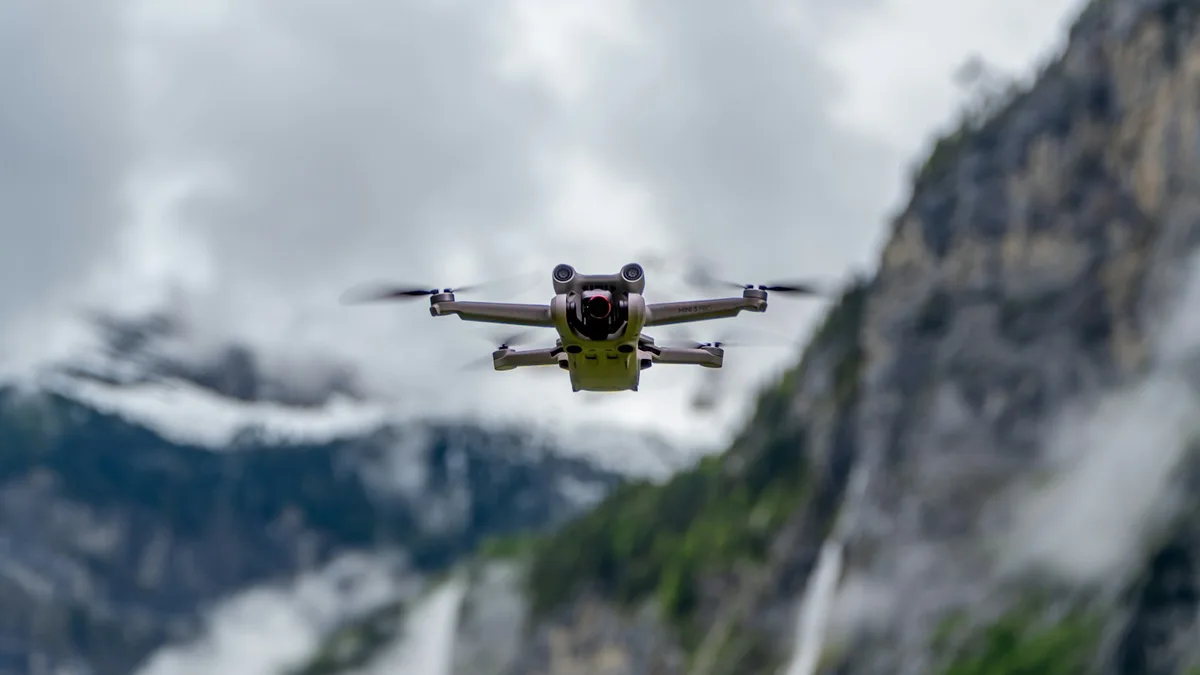
DJI Mini 3 and Mini 3 Pro look like close relatives, and both can turn the camera for true vertical capture. The Pro suffix is useful when a brief calls for higher-frame-rate 4K video, subject tracking or forward and backward obstacle sensing. It is not a blanket assurance that the drone will avoid every wire, tree, balcony or person. For an India-based buyer, the choice also changes with the battery fitted: the optional Plus pack can put either aircraft above the sub-250 g configuration on which its marketing often concentrates. Compare the exact aircraft, battery, controller and finished delivery before paying for a feature list.
The DJI Mini 3 specification lists a 1/1.3-inch sensor, f/1.7 lens, DNG photographs and 4K video up to 30 fps. The DJI Mini 3 Pro product and support page lists the same sensor class and 4K up to 60 fps, plus forward, backward and downward vision sensing and FocusTrack. Both offer a rotating camera for portrait recording. These are published model capabilities, not evidence that a particular used unit is healthy or that a proposed Indian flight is permitted.
Start with the delivery format
Ask whether the client wants a vertical social reel, a landscape film, raw property stills, a slow-motion sequence or a tracked subject. If the assignment consists of steady daylight 4K/30 clips and portrait reels, Mini 3's camera already supports the core formats. Its vertical mode is materially different from cutting a tall frame out of a landscape recording: the gimbal rotates, so the camera uses more of its sensor for the portrait composition. This can matter for a building façade, a person at a site entrance or a narrow corridor between structures.
Mini 3 Pro adds 4K/60 for projects where motion needs a smoother acquisition or a two-times slow-down in a 30 fps timeline. That value is real only if the camera mode and delivery workflow support it. Confirm the codec, colour profile, storage speed and editing computer used on the job; the Pro label does not make a badly exposed clip easier to grade. For a still-photo brief, both models can produce raw files, so controlled light, framing and lens condition may matter more than the suffix. Compare original DNGs from the actual airframes if one will be used for paid image work.
Do not turn sensor dimensions into a night-shoot promise. The 1/1.3-inch class is larger than the 1/2.3-inch sensor in earlier Mini products, but it remains a small aerial camera. Low sun, reflective glass, shadowed façades and moving traffic can exceed the scene range a single exposure records cleanly. Schedule important exteriors for workable light, review the histogram and retain a ground-camera option for details that the aerial view cannot resolve. A commercial package should be described by its deliverables, not by the drone model alone.
What the Pro sensing actually covers
DJI says Mini 3 Pro has forward, backward and downward vision sensors. That is useful for certain manoeuvres and enables DJI's APAS and FocusTrack features, but it is not all-direction sensing. A drone moving sideways along a building can encounter hazards outside those sensor directions. Thin wires, glass, low-texture surfaces and low light are difficult for visual systems. The operator still needs an unobstructed path, conservative speed, a suitable observer and a clear abort point. Read the limitations in DJI's manual before enabling automated movement near a site.
The standard Mini 3 has a downward positioning system but lacks the Pro model's forward and backward obstacle-detection arrangement. That difference may justify the Pro for a creator who frequently works around structures, provided the pilot understands the system's boundaries. It does not justify flying closer to a hazard than the assignment requires. If a client asks for a balcony-to-balcony move between towers, the right response may be a different aircraft, additional crew, a ground camera or no flight at that position. Automation is a tool for a planned route, not a substitute for site reconnaissance.
FocusTrack can help keep a person or vehicle framed, but obtain the necessary permissions for the subject and location, plan what lies beyond the subject, and test the motion in a clear area. A subject can walk under trees or toward crowds while the aircraft continues a tracking manoeuvre. A pilot should be ready to take manual control and end the move. A carefully piloted Mini 3 can make a strong manual orbit or reveal; its lack of FocusTrack does not prevent effective filmmaking if the shot list is designed for the operator.
Battery choice changes the weight conversation
DJI lists the standard Mini 3 at 248 g and says its Intelligent Flight Battery Plus takes the aircraft to about 290 g. DJI likewise states that the Mini 3 Pro exceeds 249 g when its Plus battery is fitted. The longer published endurance for a Plus pack is a laboratory result, and the pack may not be available in every region. Do not compare one model's standard-battery flight time with the other's Plus-battery figure as though the configurations were equivalent. The extra mass can change the India weight classification and the aircraft's handling.
India's Drone Rules, 2021 define nano by maximum all-up weight including payload. Check the actual aircraft in the intended configuration, including guards, lights or other accessories. Weight alone does not grant unrestricted airspace use. Before each flight, examine the DigitalSky airspace map for the location and confirm any current requirements that apply to the operation. DJI's own FlySafe screen and an overseas seller's “no licence” claim cannot replace that India-specific check.
Build endurance around usable minutes, not a manufacturer's maximum. Plan takeoff, framing, retries, safe return and a landing reserve. In a hot Indian afternoon, avoid charging or storing packs outside the manufacturer's temperature guidance. If the brief needs several camera positions across a large property, extra healthy standard packs and a planned charging rotation may be more valuable than one Plus pack. Confirm charging-hub and battery compatibility from DJI documentation for the exact models before mixing accessories from different bundles.
Test three realistic jobs
For a property launch film, outline a wide approach, a slow elevation reveal, an overhead context image, three stills and a portrait cut. Mini 3 can execute the basic format when the location allows flight and the pilot keeps the route clear. Mini 3 Pro earns its premium if 4K/60 movement, FocusTrack or the extra sensing improves a specific planned shot. Neither model turns an inaccessible roof into an automatically safe location. The crew should use ground footage to explain entrances, amenities and interiors that aerial footage cannot show.
For a creator filming an outdoor event, the subject and background move independently. Mini 3 Pro's tracking may help a controlled shot of a consenting person in a clear area, but crowd separation and local flight restrictions may rule out the shot entirely. A manual Mini 3 shot from a safe, static position can be more defensible than an ambitious automatic track. Decide where the aircraft will take off, what route it follows, who watches it and how the move ends before discussing which model is superior.
For a monthly construction record, a consistent location, camera angle, timestamp and file naming standard usually beat a clever automated mode. Both models can document broad progress in daylight. Pro sensing may be useful around planned routes, but it does not certify façade clearance. If the client needs measurements, defect identification or a survey model, create a separate accuracy and validation specification; neither consumer Mini becomes a survey instrument merely because it can record 4K or raw stills.
Buying either model in India
For a used aircraft, test the gimbal in horizontal and vertical positions, capture original files, inspect every battery and review app warnings. Verify the precise controller model and all included charging parts. Ask for serial numbers, transaction records and any repair history. A listing described as “Mini 3 Pro Combo” may contain a mix of packs and accessories that changes both usable flight time and all-up weight. Written condition notes are more useful than a generic “mint” label. Verify any promised manufacturer support with the actual provider.
Do not confuse ownership, import and flight rules. The DGFT drone-import notification concerns importing complete drones and specified exceptions. A seller's local invoice is evidence to examine, not a complete legal conclusion. Check current rules for the transaction and the intended operations. Avoid unsupported claims about Indian street prices, warranty reach or routine enforcement; those details can change and need direct evidence.
The clearest decision is conditional. Choose Mini 3 when true vertical capture, 4K/30 and raw stills meet the real output and the operator can plan manual routes safely. Choose Mini 3 Pro when its 4K/60, supported tracking and directional sensing solve a demonstrated production need, with their limits understood. If neither can meet the site, lighting or measurement requirements, change the plan or platform. The purchase is successful when the tested bundle produces the agreed files within a lawful, safe workflow—not when it wins a specification comparison.
Plan your project
Share your site, dates and intended output so we can confirm a suitable scope.
Explore managed drone services · Compare project scope · Get in touch
Related reading
- DJI Mini 2 SE vs Mini 4K in India: Choose for the Finished Video
- DJI Mini 4 Pro in India: Camera, Sensing and Production Workflow
- Buying a Used DJI Mini 2 in India: A Field Inspection Checklist
Contact SkyViews Aerial Drone Studio at +91 90190 56479 or skyviewsdronestudio@gmail.com. Service area: Bangalore, Karnataka and India and wider Bangalore, Karnataka and India.