Event Drone Shoot Crowd-Safety Planning Guide for Bangalore
How wedding, festival, corporate and public-event teams should plan aerial coverage around people, access, timing, privacy and safe operating...
By SkyViews Aerial Drone Studio
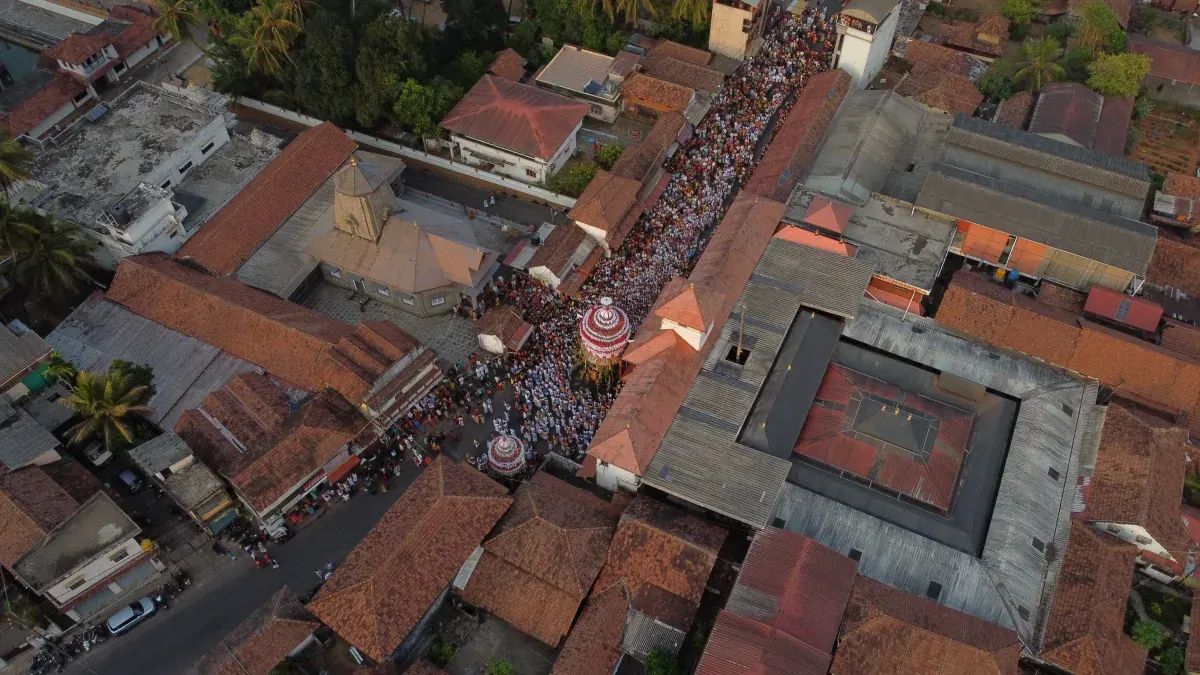
Event aerial content must be planned around people first and visuals second. A dramatic overhead shot is not worth an unsafe flight or unclear responsibility at a crowded venue. Use this guide for weddings, festivals, corporate events, sports activities and public gatherings.
Give the venue a real brief
Provide the exact venue, event schedule, guest-count range, access times, take-off options, stage or performance zones, security contact and no-film areas. The venue should nominate one person empowered to pause the operation if the ground situation changes.
Keep people and aircraft separated
The pilot and organiser should agree on controlled areas, spectator boundaries, movement windows and communication. Do not treat a small or lightweight aircraft as automatically safe to fly over a crowd. Current requirements and actual venue risk must be checked before the event.
Capture without interrupting the event
Build the shot list around venue reveals, arrival, architecture, landscape, empty-set details and approved performance windows. Consider capturing the venue before guests arrive and using ground cameras for close human moments when an aerial angle would be intrusive or risky.
Coordinate privacy and weather
Tell the team whether guests, children, staff, performers, branding and neighbouring properties may appear. Agree who approves public edits. Keep a backup time or date where possible; no production deadline overrides safe operating conditions. See the privacy guide and weather guide.
Decide what the aerial view adds
An event can produce useful aerial images without putting an aircraft near a dense audience. Start with the story: a venue reveal, landscape setting, arrival route, festival layout, stage build or closing light. List the few frames that an elevated camera can explain better than a ground camera. A close reaction from guests or a performer is usually better captured by a camera operator on the ground.
Make a shot list with the time, subject, proposed position and intended use of each aerial image. Separate pre-event, live-event and post-event opportunities. An empty venue before doors open may offer the cleanest architecture view. A planned short flight during a controlled transition may give context. A crowded dance floor does not become an acceptable route merely because it would make a dramatic clip.
Map people as carefully as buildings
Ask the organiser for the current venue plan, expected audience flow and the times when movement changes. Mark entrances, queues, food areas, stages, parking, roads, emergency routes, vendor spaces and areas used by children. Include temporary objects such as lighting towers, banners, cranes and cables. A site that looked open during a weekday inspection can become crowded on event day.
Walk the venue with the pilot and the person responsible for security or crowd management. Choose an operating area and launch point that can be controlled. The plan should describe where the crew stands, how bystanders are kept away from the launch and recovery area, and who can stop nearby activity when needed. Do not rely on a line drawn on a map if people can freely walk through it.
For a public event, a crowd may not move as scheduled. Decide in advance which aerial shots are cancelled if the ground area becomes occupied. The pilot must retain the option to land or not launch, even if a stage cue or sponsor moment is approaching. This is easier to explain before the event than over a live production radio.
Put responsibilities on one page
Name the client producer, venue manager, event security lead, drone pilot and media approver. The pilot owns the aircraft operating decision; the organiser controls event timing and people on site; the venue controls access and its own rules. Write down the radio or phone channel, the words used to pause a flight and the person who can move guests or stop a performance cue if necessary.
Share a short timeline with the event team. For example: site check, weather and airspace recheck, setup, briefing, controlled capture window, media backup and approval of any public clip. A pilot arriving only minutes before the keynote will not have the same chance to verify changes on the ground. Reserve a setup and decision period in the call sheet.
Check the live flight conditions
The venue address alone is not enough for an aviation assessment. Give the operator an exact pin, planned operating area, intended altitude, date and time, aircraft and purpose. Current DGCA guidance and the Digital Sky map are starting points for the official checks. The pilot must assess the live requirements and any local or temporary restrictions for that particular operation. Venue approval is a separate step.
Weather can change quickly during an outdoor event. Wind near a large building or stage structure may differ from the general forecast. Rain, visibility and light also affect safe operation and usable footage. The plan should include an alternate time, a ground-camera substitute or a changed shot. Do not ask the crew to fly simply because the venue is booked and guests are waiting.
Treat weddings and public festivals differently
A private wedding venue may allow tighter control of access and communication with guests, but it still needs an actual flight and people-safety assessment. The couple should know which parts of the ceremony are suitable for aerial context and which should be filmed from the ground. Mark private rooms, neighbouring homes and children’s spaces as no-film areas when appropriate. Coordinate with the planner so a drone does not interrupt vows or speeches with noise.
A public festival can have uncertain arrival patterns, multiple organisers and a larger publication audience. The team needs a clearer security contact, agreed operating boundaries and a stronger fallback plan. If the event is near roads, rail, water or sensitive places, the pilot should examine those features before proposing any route. Crowd size is not a reason to rush checks; it is a reason to simplify the flight or omit it.
Plan the edit and consent before the camera rolls
Tell the operator and editor whether the footage is for a private film, social recap, sponsor ad, news use or live screen. These are different uses. A guest may expect to appear in a wedding album but not in a paid promotion. An event organiser should review talent, performers, sponsor marks, neighbouring property and identifiable people before public release. Use notices and individual permissions where the production and applicable rules require them.
Keep source footage secure and restrict access to the people editing or approving it. A wide shot can reveal more than the main subject: entrances, security arrangements, vehicle plates or private neighbouring spaces. Crop, blur or omit such material where needed. Add a caption and date when an aerial scene could otherwise be mistaken for a different event or location.
Agree a realistic delivery window
Same-day highlights require a short capture list, quick media transfer, a clear editor and one person who can approve the result. Specify how many selected clips or stills are expected, what format is needed and the time of the first review. A full cinematic film with colour, sound, subtitles and multiple approvals is a different job. Do not promise it under the label “same-day social edit.”
For a next-day or later film, keep camera originals separate from selects and final exports. Provide the organiser with a file list and a record of shots that were not possible. If the planned aerial hero shot was cancelled, the editor should use the agreed ground alternative instead of inserting an unrelated aerial image that misrepresents the event.
Example: a Bangalore corporate launch
Imagine an outdoor product launch at a campus. The producer wants one establishing view, one venue reveal and a short social recap. The venue gives the pilot a site map and controlled setup area. The pilot checks live airspace and conditions, and the security lead explains where attendees will queue. The team captures the venue before guests arrive and a second wide shot only if the agreed area remains clear. Ground cameras cover the speaker and audience reaction.
After the event, the editor uses the dated venue view, approved product images and ground footage. The marketing owner checks claims, people and sponsor marks before posting. If the live aerial shot was not safe, the recap still tells the story. This is a stronger production plan than making the whole launch depend on one risky camera move.
FAQs
Can drones fly directly over wedding guests?
Do not assume that they can. The pilot must assess current rules, venue conditions, aircraft, people separation and the planned operation.
Should the drone team attend a venue walkthrough?
A walkthrough or remote briefing helps identify access, obstacles, timing, privacy and crowd-control arrangements.
Can event footage be delivered the same day?
Same-day delivery may be scoped for selected media, depending on capture length, editing, connectivity, approvals and workflow.
Plan your project
Share your site, dates and intended output so we can confirm a suitable scope.
Explore drone services · Compare project scope · Get in touch
Related reading
- Drone Permissions in Bangalore: Airspace, Safety & Booking Guide
- Airspace Mapping, Geofencing & DJI Dilemma in India
- Commercial Drone Pre-Flight Checklist for Bangalore Clients
- Sports Event Drone Photography and Video in Bangalore: Planning Guide
- Tourism Destination Drone Content in Karnataka: Film and Photography Guide
- Agriculture Drone Mapping for Farms and Estates in Karnataka: Practical Guide
Contact SkyViews Aerial Drone Studio at +91 90190 56479 or skyviewsdronestudio@gmail.com. Service area: Bangalore, Karnataka and India and wider Bangalore, Karnataka and India.