How to Choose a Drone Company in Bangalore for a Commercial Project
A practical buyer checklist for comparing drone companies, pilots, equipment, permissions, deliverables, insurance, portfolio evidence and...
By SkyViews Aerial Drone Studio
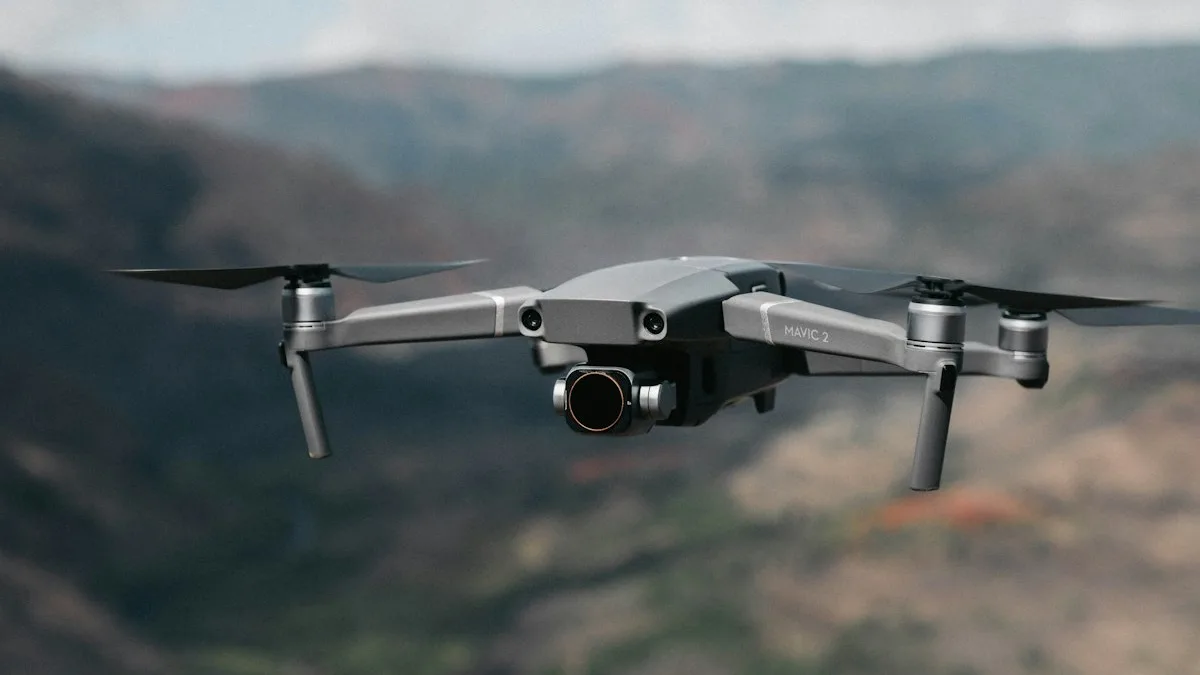
The right drone company is not simply the one with the most impressive reel or the lowest quote. A commercial buyer should evaluate whether the provider understands the objective, can operate safely at the site, has the right crew and equipment, and will deliver files the business can actually use.
Start with relevant work
Look for examples similar to the assignment: construction documentation, real estate, industrial inspection, hospitality, architecture, weddings, film production or survey mapping. A cinematic reel does not automatically prove survey or inspection capability.
Ask for one complete example, not only a 20-second highlight. For a property campaign, look at the final still set and both horizontal and vertical edits. Can a buyer understand the entrance, building and setting? For construction, ask for two dated visits from the same site. Are the viewpoints comparable, and can you tell what changed? For an inspection, ask for a sample report with asset IDs and linked photographs. For mapping, ask for a sample quality statement and a file list, even if the client data itself must remain private.
Ask the provider what part of the example they performed. A studio may have flown the drone, edited another crew's footage or coordinated the whole job. Those are different skills. If confidentiality prevents sharing a client case, an anonymised sample can still show report structure, naming and review method. Look for work that answers your business question, not simply beautiful movement.
Ask about the operating plan
A serious proposal should address the location, airspace, site access, weather, people, hazards, equipment, crew roles, contingency plan and deliverables. If a provider promises every location without checking the actual site, ask how feasibility is being assessed.
Send the same exact map pin and site notes to each company. Ask who will review current airspace information and who will secure property access. A map colour alone does not settle privacy, take-off space, nearby people or local instructions. A site owner can grant access without approving an unsafe flight, and an operator can have suitable aircraft without permission to use a particular roof. The proposal should state these dependencies plainly.
Ask for a simple explanation of the planned operating area. Where will the crew set up? Which areas need to be kept clear? Who can stop the shoot if people enter the area? What happens if wind, rain or another site activity interrupts capture? You do not need an aircraft manual, but you should understand the safety plan well enough to coordinate your own staff and visitors. If a provider cannot explain a sensible fallback, the booking may be harder to manage on the day.
Separate creative and technical deliverables
Clarify whether you need edited photos, RAW stills, a finished video, raw footage, vertical versions, a report, orthomosaic, point cloud, thermal imagery or volume calculations. These are not interchangeable outputs.
Choose a deliverable by its future use. A social team may need a short vertical film with captions and approved music. A sales team may need labelled photographs and a landscape film for a website. A survey team may need a georeferenced file, documented control and an accuracy check. An asset manager may need a location-linked image log that can be used on the next inspection. Ask for a sample of the actual handover format so the receiving team can say whether it can use it.
Be wary of broad words such as “all footage” or “3D model.” All footage might mean untouched clips, selected usable clips or an edited film. A 3D model might be a visual mesh or a measurement-ready surface. Write down format, quantity, resolution where relevant, location reference, naming, review round and what technical claims the provider will support. If those points are omitted, two proposals may appear similar while promising different work.
Check documentation and accountability
Depending on the assignment, ask about pilot credentials, aircraft documentation, risk assessment, site permissions, insurance, data handling and who is responsible for technical interpretation. A client should be able to understand what is included without relying on vague “professional” language.
Keep the questions tied to the actual mission. A certificate photographed years ago may not establish that the aircraft, pilot and proposed flight meet current requirements. Ask the provider to explain what it will verify before confirming the date. If an industrial or public site has its own induction, permit or security process, find out who will complete it and when. Record the site contact who can answer practical questions about access and hazards.
Ask how files will be transferred and stored. A confidential roof or facility image should not be placed in a public portfolio without approval. Find out who can access source media, how long a download link remains live and who keeps the archive after handover. If the project involves identifiable people or neighbouring property, decide who reviews the public selection. The provider's technical skill and the client's approval process must work together.
For survey and inspection jobs, ask who makes the professional interpretation. A pilot can collect imagery, but a client should know whether the quote includes a surveyor's check, engineering review or only a visual record. The report should mark uncertain findings and the limits of the method. This is more useful than a generic statement that the work is “accurate” or “AI powered.”
Compare quotes fairly
Compare flight time, crew, equipment, travel, editing, music, usage, revisions, turnaround, raw-media handoff and recurring-visit terms. A low headline price may exclude the work that makes the project useful.
Put the quotes into a small table with one row for each requirement. Mark each row included, excluded or unclear. Use the same site, date, deliverables and usage request for every company. A quote for one pilot and raw clips cannot be compared directly with one for a pilot, ground camera crew and finished film. A mapping quote without ground control cannot be compared directly with one that includes check points and a documented quality report.
Ask about change and reshoot terms. What happens if the site is closed, the client changes the shot list or weather stops the aerial portion? Is a return visit included? Is there a charge for extra edits or a second aspect ratio? A clear answer helps you budget and plan; it also reduces disagreement after the team has mobilised. Read the written exclusions as carefully as the price.
Why SkyViews positions around outcomes
SkyViews Aerial Drone Studio supports commercial drone services in Bangalore, construction monitoring, survey and mapping and industrial inspection. The proposal is built around the project's purpose, site and deliverables rather than a generic camera rental.
Compare the same scope
Before comparing totals, put both quotes in columns and check crew time, travel, aircraft/sensor, photos, edited duration, aspect ratios, raw files, usage, revisions and rescheduling. Mark each item included, excluded or unclear. Ask for clarification where one provider's “video” is raw clips and the other's is a finished film.
Record technical review as a separate requirement for mapping or inspection. A lower total is not automatically a like-for-like offer. Use packages to prepare a common brief, then ask each provider to quote against that same list.
Use a practical selection scorecard
Rate each proposal on five questions: Does it answer the original purpose? Does it explain the site and safety plan? Does it show relevant work? Are the file list and review process clear? Are the price and exclusions understandable? A simple one-to-five score on each question can make a team discussion less dependent on the most persuasive sales call. Note the evidence behind each score, not only the number.
Give extra weight to the issue that matters most for your project. A wedding film needs a crew that can work with the event schedule and ground cameras. A recurring construction record needs repeatable viewpoints and reliable file naming. A survey needs the right coordinate, control and validation plan. The “best” provider is the one whose method fits the decision, location and budget you actually have.
If two providers look close, ask both to explain the same likely problem. For example, “What will you do if the west side of the site is blocked by a crane?” or “How will you show that this map aligns with our site grid?” A clear, specific answer is more informative than another list of equipment names.
FAQs
What should I ask a drone company before booking?
Ask about relevant work, pilot and aircraft documentation, site feasibility, safety, permissions, insurance, deliverables, usage rights, turnaround and backup plans.
Is the cheapest drone quote the best value?
Not necessarily. Compare the actual crew, planning, deliverables, editing, usage and risk coverage behind the price.
Can one provider handle both video and mapping?
Some providers can coordinate both, but creative capture and survey-grade mapping should be scoped separately with the appropriate equipment and quality controls.
How can I compare two drone portfolios?
Compare work from similar locations and industries, then ask what was actually delivered and what the provider's role was on each project.
Plan your project
Share your site, dates and intended output so we can confirm a suitable scope.
Explore drone services · Compare project scope · Get in touch
Related reading
- Commercial Drone Data Security in India: Client Planning Guide
- Commercial Drone Shoot Call Sheet: What to Include Before Crew Arrival
- Commercial Drone Shoot Contract Checklist for India Clients
- Drone Insurance & Liability for Commercial Shoots in India
- Film, TV & Advertising Drone Production in Bangalore: Pre-Production Guide
- Drone Earthwork & Stockpile Volume Measurement in Bangalore
Contact SkyViews Aerial Drone Studio at +91 90190 56479 or skyviewsdronestudio@gmail.com. Service area: Bangalore, Karnataka and India and wider Bangalore, Karnataka and India.