Stadium and Sports-Facility Drone Photography in Bangalore
How stadiums, academies, clubs and sports facilities can plan aerial architecture, event, crowd, field and marketing content safely.
By SkyViews Aerial Drone Studio
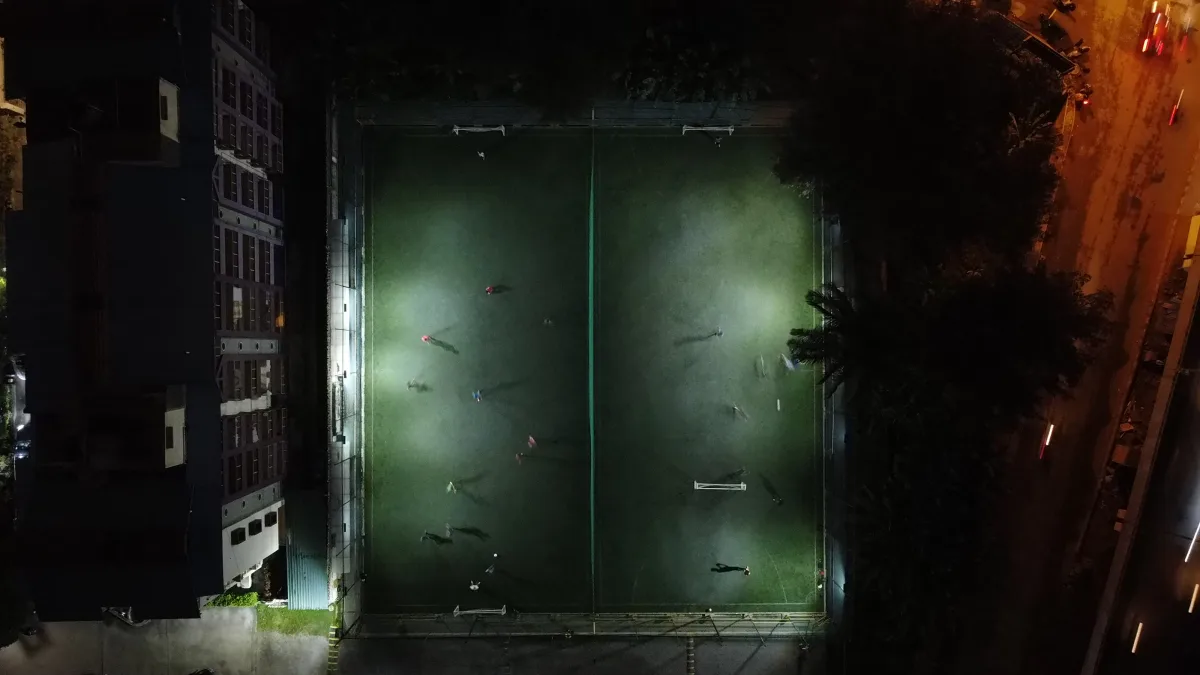
A stadium looks different when it is empty, when a team is training and when spectators arrive. A drone can show the full seating bowl, field, access routes and wider campus in a way ground photographs cannot. It can also add a short opening view to a sports film. The production plan must match the state of the venue. A quiet architecture shoot and a live match are separate jobs with different people, permissions and risks.
This guide is for stadiums, academies, clubs and sports-facility teams in Bangalore. It covers briefing, scheduling, crowd and broadcast coordination, product accuracy and delivery. The site and pilot must assess the actual proposed flight. Aerial content is useful only when it can be captured without compromising the event or the people using the facility.
Facility Scoping & Pre-Event Capture
Define the purpose of the content
Ask what the viewer should learn. A venue brochure may need the location of stands, training fields, parking and entry gates. A club film may need the identity of the place and a few approved sporting moments. A sponsor presentation may need to show where a brand appears. A construction update may need dated views of a new stand or field. One generic orbit will not explain each of these well.
Write a short audience list and pair each audience with a question. A ticket buyer may ask which gate to use. An event organiser may ask how loading and visitor circulation work. A prospective academy family may want to understand the fields and facilities. A drone can establish the layout, while ground footage can show the experience at human scale.
Separate permanent venue features from temporary event setups. A stage, sponsor structure or temporary seating block should not be shown as a year-round facility unless the venue confirms that use. Keep event-specific edits apart from evergreen architecture images.
Plan an empty-facility shoot first
An empty or controlled window is often best for architecture, wayfinding and facility marketing. It can show the whole field and building without a crowd or event equipment. The venue team should identify the main entrance, stands, training areas, service access and approved camera positions. Capture a wide establishing view and closer views that explain each zone.
Ask which route visitors really use. A dramatic view of the rear facade may look impressive but be poor guidance for a first-time guest. Pair aerial context with ground views of signs, gates and accessible paths. If the facility has several fields or courts, label them consistently in the image index.
Do not infer capacity or quality from the image. The number of seats, dimensions of a playing surface and approval to host an event should come from the facility's verified information. The picture can illustrate those facts; it cannot establish them by appearance.
Treat training and live events as new plans
Training may involve athletes, coaches, ground staff and moving equipment. A live match adds spectators, security, broadcast crews, vehicles and changing event schedules. The producer should not copy the empty-venue flight plan into these settings. The site lead and pilot need a new assessment and a clear decision about whether an aerial view is appropriate.
Share the fixture timetable, rehearsal periods, media zones and restricted areas. Agree who can stop the capture when an unexpected activity begins. A pre-opening view may show the venue prepared for the event without trying to fly near spectators. A ground camera may be better for the crowd reaction or player detail that the edit needs.
Never assume that a small aircraft can fly over a crowd or athletes. The pilot, organiser and relevant authorities must assess the operation, people separation, equipment, conditions and current requirements. If the desired shot cannot be obtained within an approved plan, remove it from the story rather than improvising above the event.
Broadcast Coordination & Crowd Safety
Coordinate with broadcast and venue control
A match may have fixed broadcast cameras, cables, lighting rigs, screens and a live production schedule. The venue should tell the drone crew what camera positions and radio or operating restrictions apply. A drone operator should not create interference, block a broadcast angle or surprise venue control with an unscheduled movement.
Identify who owns the event media rights. The venue's approval to enter does not automatically settle rights to game footage, athletes, teams, sponsors or broadcast material. The production lead should confirm which moments may be filmed and how they may be used. If only exterior context is needed, keep the drone assignment to that scope.
Make a call sheet with the site contact, pilot, media coordinator, security lead, planned windows and backup views. A live event can change quickly; the crew needs one shared version of the plan and a clear way to cancel a shot.
Show the facility accurately
Use aerial stills to explain stands, field layout, training areas, parking and approach. Give each area a name that matches the venue's signs and maps. If the venue has a new stand under construction, label it as such. Do not crop unfinished work out of a progress report and then describe the facility as complete.
For academy marketing, show facilities that members can actually use. A nearby field may belong to another organisation. A temporary event setup may be unavailable on normal days. The content owner should verify every amenity caption and separate proposed improvements from current features.
For a public wayfinding image, avoid relying on a high aerial angle alone. Add clear gate labels and a simple route map approved by the venue. A view can show where parking is located, but it may not show which entrance is open for a particular event. Update the graphic when operations change.
Protect people in the frame
Spectators, students, athletes, staff and children may appear in a wide image. Plan the capture to avoid unnecessary identifiable detail. Check the venue's consent and safeguarding process for any person-focused content. A high camera does not remove the need for review when the final image is sharp enough to identify people or private activity.
Review vehicle plates, security points, team areas and nearby private property before publishing. The operational archive may include wider context than the public clip needs. Store full-resolution originals with access suited to the project and give sponsors only the approved version for their agreed use.
If a sponsor or team logo appears in a public film, verify the right to use it. A venue film, club film and sponsor edit may require separate approvals even when they share the same source shot.
Multi-Channel Delivery & Media Asset Library
Capture for the right channel
A website banner needs a clear subject and room for text. A vertical reel needs framing that survives a phone crop. A sponsor presentation may need slower shots so placement is readable. A venue film may benefit from one broad opening, a route through the campus and a final view. Plan these outputs before the crew films.
Keep steady stills as well as moving shots. A fast pass may look strong in a highlight edit but give the venue no suitable image for a schedule or ticket page. Capture clean footage without dated event graphics where possible, then make approved event-specific versions in editing.
Record the capture date and setting. A packed stadium image from last year can be a legitimate archive photograph, but it should not be presented as a current fixture or typical attendance without a clear caption. A training scene should not imply a major event took place.
Build a controlled approval path
The first edit review can check story and shot selection. The next should check names, fixture date, sponsor marks, venue claims, people, rights and any required disclosure. The final review should confirm sizes, captions, music and delivery versions. Name one person to collect consolidated comments so conflicting instructions do not reach the editor.
For fast event highlights, decide what can be approved quickly. A small set of stills may be possible before a polished video is ready. Weather, access, file transfer and rights review all affect timing. The call sheet should have a realistic fallback if the aerial portion is cancelled.
Deliver a reusable venue library
Provide approved stills, films, vertical versions, clean masters and raw footage only where included in the scope. Keep architecture, training and event material in separate folders. Use an index with the view, date, location and usage status. A later marketing team should be able to find a clean empty-stadium view without accidentally selecting a restricted match clip.
The best stadium aerial work explains place and scale. It does not depend on flying near a crowd to feel exciting. For more event planning, see the event crowd-safety guide and sports guide.
Plan your project
Share your site, dates and intended output so we can confirm a suitable scope.
Sports & Action Coverage · Compare project scope · Get in touch
Related reading
- Sports Event Drone Photography and Video in Bangalore: Planning Guide
- Adventure Sports and Outdoor Tourism Drone Video in India
- Wedding Drone Photography & Aerial Video Guide Bangalore
- Eco-Resort and Wildlife Conservation Drone Storytelling in India
- Construction Site Safety Drone Documentation in India: Practical Guide
- Manufacturing Plant Expansion Drone Documentation in India
Contact SkyViews Aerial Drone Studio at +91 90190 56479 or skyviewsdronestudio@gmail.com. Service area: Bangalore, Karnataka and India and wider Bangalore, Karnataka and India.