Wedding & Event Drone Shoot Planning in Bangalore: Venue Checklist
A practical checklist for wedding planners, couples and event teams booking aerial coverage while protecting guest safety, privacy and the...
By SkyViews Aerial Drone Studio
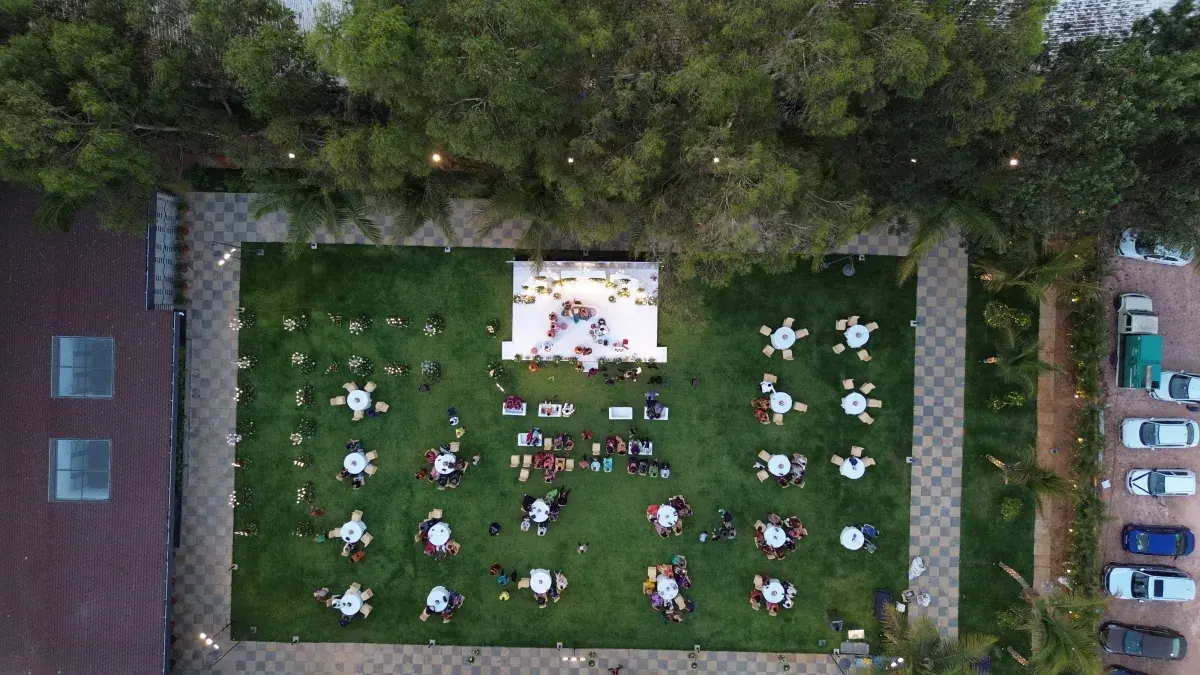
Wedding and event drone coverage is more than a dramatic venue shot. A good plan fits the event schedule, protects guests, respects the venue and captures a small number of meaningful moments without disrupting the celebration.
Share these details before booking
- Venue map and exact location
- Event date, functions and time windows
- Guest count and outdoor areas
- Venue rules, security contact and no-film zones
- Desired moments: arrival, venue reveal, group shot, decor, procession or landscape
- Deliverables: stills, raw footage, teaser, full film or vertical reels
- Weather backup and privacy expectations
Safety and guest privacy
The operator should avoid flying over uninvolved crowds or placing guests in a flight path. Controlled scenes, empty venue windows and safe standoff positions usually create better footage and a calmer event. The couple or planner should confirm consent expectations and how the footage may be used online.
Plan the event story
Capture the venue before guests arrive, the scale of the setting, the approach and a few purposeful moments. Coordinate with the ground photographer and videographer so aerial movement complements, rather than interrupts, the main coverage.
Weather and timing contingencies for events
Wind, rain, low light, crowd movement and venue restrictions can change the plan. Reserve a flexible window for venue establishing footage and keep the priority moments clear so the crew can work efficiently.
Choose the moments an aerial camera can explain
A wedding film needs faces, voices and small human moments. A drone is usually best for the setting: where guests arrive, how a garden or courtyard is arranged, or how the venue sits in its landscape. Write a short list of aerial goals and keep the rest with the ground camera team. A close view of vows, rings or family reactions is rarely improved by flying an aircraft nearby.
Rank the aerial images by importance. An empty-venue establishing shot may be essential for the film. A wide view of a procession may be optional if the route cannot be controlled. A late-night overhead shot may be unnecessary if it would add noise or risk. The editor should know which scenes can be replaced by ground footage without breaking the story.
Walk the venue with the planner
Ask for the exact venue map, entrance, stage, guest seating, dining areas, roofs, wires, lights, trees, parking and emergency paths. The layout may change between functions. A mandap, temporary tent or lighting rig can appear after the first site visit. Give the pilot an updated plan and a venue contact before each planned flight window.
Choose a controlled launch and recovery area away from guest movement. If a venue cannot keep that area clear, change the shot or omit the flight. Do not ask the pilot to take off from a busy path or fly directly over an uninvolved crowd for a group image. A high fixed camera or ground-level group photo may be a better solution.
Coordinate with the ground film team
The photographer, videographer, planner and drone pilot should share a simple call sheet. It should show the times of arrivals, ceremony, portraits, speeches and room changes. Add who has priority when a moment happens and how the crews communicate. A drone launch during vows may distract people and spoil the sound recording. A short venue flight before guests arrive can give the editor useful context without disrupting the ceremony.
Agree whether aerial footage is delivered to the couple's existing film editor or edited by the drone team. If it goes to another editor, define file format, colour profile, frame rate and delivery time. The crews should not assume their cameras will match automatically. A short technical handover can save hours later.
Check current flight and venue conditions
The pilot needs the exact site, proposed camera area, time, weather, aircraft and purpose. A venue contract is not an aviation approval. Current DGCA and Digital Sky requirements must be checked for the actual operation; the flight permission planning checklist lists the useful inputs. The venue may also have its own rules about roofs, outdoor areas and filming neighbours.
Wind can rise around tall buildings even when a weather app looks calm. Rain, low light and guest movement may remove a flight window. Give the pilot authority to stand down and the planner a ground alternative. A couple should know this before the day rather than hearing it during a delayed ceremony.
Respect guests and private spaces
Tell guests or their representatives how the event may be filmed and published under the couple's plan. Some people may be comfortable in a private wedding film but not in a public social clip or vendor advertisement. Identify children, private rooms, neighbouring homes and any no-film areas. Review the full frame before posting; a wide aerial can capture people or property the camera team did not notice during flight.
The couple should decide whether vendors may use the footage in their portfolios. That use can be different from delivery to the couple. Put usage rights and approval steps in writing. The privacy and consent guide and licensing guide help frame the discussion.
Plan a realistic set of deliverables
List selected stills, raw aerial clips, a short teaser, vertical reels and footage for the main wedding film separately. State who edits each item, how many revisions are included, music and caption responsibilities, and when the files are due. A “same-day teaser” needs its own editor and approver available during the event. It should not be treated as a free by-product of filming.
Ask what the couple will actually watch and share. A beautiful two-minute venue montage may be less useful than a handful of strong establishing shots that support a wider film. If the venue is used for several functions, plan a small amount of footage for each distinct setup rather than repeating the same pass every day.
Keep the schedule calm
Build one or two short aerial windows into the event plan, with setup time before them. Avoid asking the drone crew to move through crowds carrying equipment at the last minute. If the venue must pause a service road or clear a lawn, the planner should own that coordination. A clear stop signal should be understood by the pilot and venue team.
After each flight, the crew should back up media and check that essential shots are usable. If a scene is missing, decide whether a later safe window exists. Do not keep flying repeatedly in search of a perfect flourish while guests wait or conditions worsen.
Example: a garden wedding in Bangalore
Imagine a wedding at a garden venue. The couple wants the film to show the arrival path, evening lights and the size of the celebration. The pilot and planner walk the site the day before, identify a safe launch area and choose an empty-venue view before guests arrive. Ground cameras cover the ceremony, family and speeches. A later wide aerial of the lights is attempted only if weather and people control remain suitable.
The editor uses the early aerial view to establish the place, then moves to human moments. If the evening flight is cancelled, the story still works. The couple reviews any public teaser for guests and neighbouring property before vendors post it. That is a more reliable plan than building the film around a risky overhead ceremony shot.
Ask these questions before booking
Where exactly is the venue? Which functions and dates need coverage? What are the guest numbers and outdoor layouts? Who controls venue access and can pause an area? What are the must-have aerial views? Who owns the edit and approval? What happens if weather stops the flight? What rights do the couple and vendors have to publish? A provider can give a more realistic quote when those answers are available.
Related wedding and celebration drone packages
See wedding and event drone services, drone service packages and the wedding aerial guide.
FAQs
Can drones fly over wedding guests?
The flight plan must prioritise safety and applicable requirements. A controlled shot or standoff angle is often preferable to flying directly over people.
Can I get a same-day wedding teaser?
Same-day or rapid delivery depends on crew, schedule, media workflow and scope. It should be requested in the brief.
Can drone coverage be added to an existing wedding team?
Yes. Share the ground team's schedule and shot plan so the aerial crew can coordinate movement and deliverables.
What happens if weather stops the flight?
The team should follow the agreed rescheduling, cancellation and weather policy. Safety takes priority over completing a shot in unsafe conditions.
Plan your project
Share your site, dates and intended output so we can confirm a suitable scope.
Wedding & Event Cinematography · Compare project scope · Get in touch
Related reading
- Convention Centre and Event Venue Drone Photography in Bangalore
- Wedding Venue Drone Content Planning in Bangalore: Client Guide
- Wedding Drone Photography & Aerial Video Guide Bangalore
- How to Choose a Drone Company in Bangalore for a Commercial Project
- Drone Insurance & Liability for Commercial Shoots in India
- Film, TV & Advertising Drone Production in Bangalore: Pre-Production Guide
Contact SkyViews Aerial Drone Studio at +91 90190 56479 or skyviewsdronestudio@gmail.com. Service area: Bangalore, Karnataka and India and wider Bangalore, Karnataka and India.